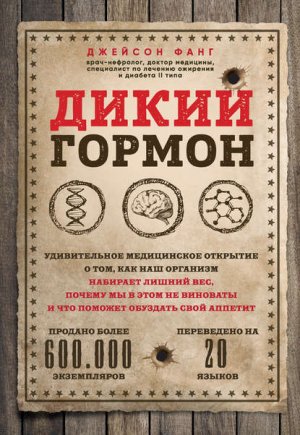
Дикий гормон. Удивительное медицинское открытие о том, как наш организм набирает лишний вес, почему мы в этом не виноваты и что поможет обуздать свой аппетит Фанг Джейсон
20. Осознанность как способ управления стрессом и эффективное средство для решения абоминального ожирения. Оригинал: Daubenmier J et al. Mindfulness intervention for stress eating to reduce cortisol and abdominal fat among overweight and obese women. Journal of Obesity. 2011; article ID 651936. Accessed 2015 Apr 6.
21. Метаболические последствия депривации сна. Knutson KL, Spiegel K, Penev P, van Cauter E. The metabolic consequences of sleep deprivation. Sleep Med Rev. 2007 Jun; 11(3):163–78.
22. Хроническая депривация сна – наша участь? Оригинал: Webb WB, Agnew HW. Are we chronically sleep deprived? Bull Psychon Soc. 1975; 6(1):47–8.
23. Историческое наблюдение за утомлением в течение дня. Оригинал: Bliwise DL. Historical change in the report of daytime fatigue. Sleep. 1996 Jul; 19(6):462–4.
24. Связь непродолжительного сна и ожирения. Оригинал: Watanabe M et al. Association of short sleep duration with weight gain and obesity at 1-year follow-up: a large-scale prospective study. Sleep. 2010 Feb; 33(2):161–7.
25. Связь непродолжительного сна и ожирения у подростков. Оригинал: Hasler G, Buysse D, Klaghofer R, Gamma A, Ajdacic V, et al. The association between short sleep duration and obesity in young adults: A 13-year prospective study. Sleep. 2004 Jun 15; 27(4):661–6.
26. Мета-анализ короткого сна и ожирения у детей. Оригинал: Cappuccio FP et al. Meta-analysis of short sleep duration and obesity in children and adults. Sleep. 2008 May; 31(5):619–26.
27. Побочные эффекты депривации сна в течение 24 часов. Оригинал: Joo EY et al. Adverse effects of 24 hours of sleep deprivation on cognition and stress hormones. J Clin Neurol. 2012 Jun; 8(2):146–50.
28. Потеря сна способствует повышению кортизола. Leproult R et al. Sleep loss results in an elevation of cortisol levels the next evening. Sleep. 1997 Oct; 20(10):865–70.
29. Потеря сна: новый фактор резистентности к инсулину. Оригинал: Spiegel K, Knutson K, Leproult R, Tasali E, Cauter EV. Sleep loss: a novel risk factor for insulin resistance and Type 2 diabetes. J Appl Physiol. 2005 Nov; 99(5):2008–19.
30. Воздействие депривации сна и упражнений на толерантность к глюкозе. Оригинал: VanHelder T, Symons JD, Radomski MW. Effects of sleep deprivation and exercise on glucose tolerance. Aviat Space Environ Med. 1993 Jun; 64(6):487–92.
31. Субхроническое ограничение сна вызывает инсулиновую резистентность в тканях. Оригинал: Sub-chronic sleep restriction causes tissue specific insulin resistance. J Clin Endocrinol Metab. 2015 Feb 6; jc20143911. [Epub ahead of print] Accessed 2015 Apr 6.
32. Нарушения сна и развитие диабета второго типа. Оригинал: Kawakami N, Takatsuka N, Shimizu H. Sleep disturbance and onset of type 2 diabetes. Diabetes Care. 2004 Jan; 27(1):282–3.
33. Непродолжительный сон связан со снижением лептина и ростом грелина. Оригинал: Taheri S, Lin L, Austin D, Young T, Mignot E. Short sleep duration is associated with reduced leptin, elevated ghrelin, and increased body mass index. PLoS Medicine. 2004 Dec; 1(3):e62.
34. Недостаток сна подрывает все усилия по сокращению адипозности. Оригинал: Nedeltcheva AV et al. Insufficient sleep undermines dietary efforts to reduce adiposity. Ann Int Med. 2010 Oct 5; 153(7):435–41.
35. Лептин и голод у молодых взрослых без проблем со здоровьем после суток без сна. Оригинал: Pejovic S et al. Leptin and hunger levels in young healthy adults after one night of sleep loss. J. Sleep Res. 2010 Dec; 19(4):552–8.
Глава 9: Бешеная атака Аткинса
1. Реориентация ожирения. Оригинал: Pennington AW. A reorientation on obesity. N Engl J Med. 1953 Jun 4; 248(23):959–64.
2. Сравнение метаболических изменений во время голодания у полных и нормальных субъектов. Оригинал: Bloom WL, Azar G, Clark J, MacKay JH. Comparison of metabolic changes in fasting obese and lean patients. Ann NY Acad Sci. 1965 Oct 8; 131(1):623–31.
3. Диета для похудения от доктора. Оригинал: Stillman I. The doctor’s quick weight loss diet. Ishi Press; 2011.
4. Переосмысление: новая наука похудения, мифы и реальность. Оригинал: Kolata G. Rethinking thin: the new science of weight loss – and the myths and realities of dieting. Picador; 2008.
5. Низкоуглеводная и безжировая диета у пациентов с ожирением. Сравнение. Оригинал: Samaha FF et al. A low-carbohydrate as compared with a low-fat diet in severe obesity. N Engl J Med. 2003 May 22; 348(21):2074–81.
6. Сравнение диет Аткинса, Зона, Орниша и других. Оригинал: Gardner CD et al. Comparison of the Atkins, Zone, Ornish, and LEARN diets for change in weight and related risk factors among overweight premenopausal women. JAMA. 2007 Mar 7; 297(9):969–77.
7. Похудение на низкоуглеводной, средиземноморской и безжировой диеты. Shai I et al. Weight loss with a low-carbohydrate, Mediterranean, or low-fat die. N Engl J Med. 2008 Jul 17; 359(3):229–41.
8. Диета с высоким и низким содержанием белка, гликемический индекс и похудение. Оригинал: Larsen TM et al. Diets with high or low protein content and glycemic index for weight-loss maintenance. N Engl J Med. 2010 Nov 25; 363(22):2102–13.
9. Влияние диеты на использование энергии организмом. Оригинал: Ebbeling C et al. Effects of dietary composition on energy expenditure during weight-loss maintenance. JAMA. 2012 Jun 27; 307(24):2627–34.
10. Влияние низкоуглеводной диеты на аппетит и прочее. Оригинал: Boden G et al. Effect of a low-carbohydrate diet on appetite, blood glucose levels, and insulin resistance in obese patients with type 2 diabetes. Ann Intern Med. 2005 Mar 15; 142(6):403–11.
11. Вес и метаболические последствия после двух лет на низкоуглеводной диете. Оригинал: Foster G et al. Weight and metabolic outcomes after 2 years on a low-carbohydrate versus low-fat diet. Ann Int Med. 2010 Aug 3; 153(3):147–57.
12. Четыре года последующего врачебного наблюдения после двух лет диеты. Оригинал: Shai I et al. Four-year follow-up after two-year dietary interventions. N Engl J Med. 2012 Oct 4; 367(14):1373–4.
13. Систематический обзор рандомизированных контролируемых исследований низкоуглеводной и безжировой диет. Оригинал: Hession M et al. Systematic review of randomized controlled trials of lowcarbohydrate vs. low-fat/low calorie diets in the management of obesity and its comorbidities. Obes Rev. 2009 Jan; 10(1):36–50.
14. Потребление нутриентов мужчинами и женщинами средних лет в Китае, Японии, США и Великобритании. Оригинал: Zhou BG et al. Nutrient intakes of middle-aged men and women in China, Japan, United Kingdom, and United States in the late 1990s: The INTERMAP Study. J Hum Hypertens. 2003 Sep; 17(9):623–30.
15. Данные для рисунка 9.1: Ibid.
16. Низкий инсулин у традиционных поселенцев на островах Тихого океана. Оригинал: Lindeberg S et al. Low serum insulin in traditional Pacific Islanders: the Kitava Study. Metabolism. 1999 Oct; 48(10):1216–9.
Глава 10: Инсулиновая резистентность: главный игрок
1. ИМТ подростков и риск развития диабета и коронарной болезни. Оригинал: Tirosh A et al. Adolescent BMI trajectory and risk of diabetes versus coronary disease. N Engl J Med. 2011 Apr 7; 364(14):1315–25.
2. Пенициллин, лекция. Источник: Alexander Fleming. Penicillin. Nobel Lecture Dec 1945. http://www.nobelprize.org/nobel_prizes/medicine/laureates/1945/fleming-lecture.pdf. Accessed 2015 Apr 15.
3. Пациенты с инсулиномой. Инсулиновая резистентность без артериальной гипертонии. Оригинал: Pontiroli AE, Alberetto M, Pozza G. Patients with insulinoma show insulin resistance in the absence of arterial hypertension. Diabetologia. 1992 Mar; 35(3):294–5.
4. Исследование пациентов с гипогликемией: резистентность к инсулину в результате инсулиномы. Оригинал: Pontiroli AE, Alberetto M, Capra F, Pozza G. The glucose clamp technique for the study of patients with hypoglycemia: insulin resistance as a feature of insulinoma. J Endocrinol Invest. 1990 Mar; 13(3):241–5.
5. Прояснение черного акантоза при хирургическом удалении инсулиномы. Оригинал: Ghosh S et al. Clearance of acanthosis nigricans associated with insulinoma following surgical resection. QJM. 2008 Nov; 101(11):899–900. doi: 10.1093/qjmed/ hcn098. Epub 2008 Jul 31. Accessed 2015 Apr 8.
6. Появление резистентности к инсулину у мужчин с гиперинсулинемией. Оригинал: Rizza RA et al. Production of insulin resistance by hyperinsulinemia in man. Diabetologia. 1985 Feb; 28(2):70–5.
7. Эффект продолжительной физиологической гиперинсулинемии на секрецию инсулина. Оригинал: Del Prato S et al. Effect of sustained physiologic hyperinsulinemia and hyperglycemia on insulin secretion and insulin sensitivity in man. Diabetologia. 1994 Oct; 37(10):1025–35.
8. Традиционная интенсивная инсулинотерапия. Оригинал: Henry RR et al. Intensive conventional insulin therapy for type II diabetes. Diabetes Care. 1993 Jan; 16(1):23–31.
9. Изменения постпрандиальной секреции инсулина. Оригинал: Le Stunff C, Bougneres P. Early changes in postprandial insulin secretion, not in insulin sensitivity characterize juvenile obesity. Diabetes. 1994 May; 43(5):696–702.
10. Голод и сытость больше не управляют питанием? Оригинал: Popkin BM, Duffey KJ. Does hunger and satiety drive eating anymore? Am J Clin Nutr. 2010 May; 91(5):1342–7.
11. Энергетическая плотность, размер порций и приемы пищи. Оригинал: Duffey KJ, Popkin BM. Energy density, portion size, and eating occasions: contributions to increased energy intake in the United States, 1977–2006. PLoS Med. 2011 Jun; 8(6): e1001050. doi:10.1371/journal.pmed.1001050. Accessed 2015 Apr 8.
12. Частота приемов пищи и энергетический баланс. Оригинал: Bellisle F, McDevitt R, Prentice AM. Meal frequency and energy balance. Br J Nutr. 1997 Apr; 77 Suppl 1:S57–70.
13. Частые приемы пищи и похудение. Оригинал: Cameron JD, Cyr MJ, Doucet E. Increased meal frequency does not promote greater weight loss in subjects who were prescribed an 8-week equi-energetic energyrestricted diet. Br J Nutr. 2010 Apr; 103(8):1098–101.
14. Влияние употребления белка и частоты приемов пищи на аппетит. Оригинал: Leidy JH et al. The influence of higher protein intake and greater eating frequency on appetite control in overweight and obese men. Obesity (Silver Spring). 2010 Sep; 18(9):1725–32.
15. Особенности успешного голодания в течение 382 дней. Оригинал: Stewart WK, Fleming LW. Features of a successful therapeutic fast of 382 days’ duration. Postgrad Med J. 1973 Mar; 49(569):203–09.
Глава 11: Есть больше, есть чаще, или новая наука о диабетожирении
1. Центр науки и связи с общественностью. Некоммерческие организации получают финансирование от корпораций. Источник: Center for Science in the Public Interest [Internet]. Non-profit organizations receiving corporate funding. http://www.cspinet.org/integrity/nonprofits/american_heart_association.html. Accessed 2015 Apr 8.
2. Инфаркт и инсульт – 10 ложек сахара в одном стакане. Источник: Freedhoff, Y. Weighty Matters blog [Internet]. Heart and Stroke Foundation Health Check on 10 teaspoons of sugar in a glass. 2012 Apr 9. http://www.weightymatters.ca/2012/04/heart-and-stroke-foundation-health.html. Accessed 2015 Apr 8.
3. Связь между фондами и результатами исследований. Оригинал: Lesser LI, Ebbeling CB, Goozner M, Wypij D, Ludwig D. Relationship between funding source and conclusion among nutrition-related scientific articles. PLoS Med. 2007 Jan 9; 4(1): e5. doi:10.1371/journal.pmed.0040005. Accessed 2015 Apr 8.
4. Спонсорская поддержка диетологических исследований. Оригинал: Nestle M. Food company sponsorship of nutrition research and professional activities: A conflict of interest? Public Health Nutr. 2001 Oct; 4(5):1015–22.
5. Углеводы, аппетит и пищевое поведение людей. Оригинал: Stubbs RJ, Mazlan N, Whybrow S. Carbohydrates, appetite and feeding behavior in humans. J Nutr. 2001 Oct 1; 131(10):2775–81S.
6. Частые приемы пищи не помогают похудеть. Оригинал: Cameron JD, Cyr MJ, Doucet E. Increased meal frequency does not promote greater weight loss in subjects who were prescribed an 8-week equi-energetic energyrestricted diet. Br J Nutr. 2010 Apr; 103(8):1098–101.
7. Успешное похудение и завтраки. Оригинал: Wyatt HR et al. Long-term weight loss and breakfast in subjects in the National Weight Control Registry. Obes Res. 2002 Feb; 10(2):78–82.
8. Поддержание здорового веса. Оригинал: Wing RR, Phelan S. Long term weight loss maintenance. Am J Clin Nutr. 2005 Jul; 82(1 Suppl):222S–5S.
9. Вера за гранью вещественных доказательств. Оригинал: Brown AW et al. Belief beyond the evidence: using the proposed effect of breakfast on obesity to show 2 practices that distort scientific evidence. Am J Clin Nutr. 2013 Nov; 98(5):1298–308.
10. Влияние завтрака на ежедневное потребление энергии. Оригинал: Schusdziarra V et al. Impact of breakfast on daily energy intake. Nutr J. 2011 Jan 17; 10:5. doi: 10.1186/1475–2891-10–5. Accessed 2015 Apr 8.
11. Экспериментальные манипуляции с завтраком у полных и худых. Оригинал Reeves S et al. Experimental manipulation of breakfast in normal and overweight/ obese participants is associated with changes to nutrient and energy intake consumption patterns. Physiol Behav. 2014 Jun 22; 133:130–5. doi: 10.1016/j.physbeh.2014.05.015. Accessed 2015 Apr 8.
12. Эффективность завтраков при похудении. Оригинал: Dhurandhar E et al. The effectiveness of breakfast recommendations on weight loss: a randomized controlled trial. Am J Clin Nutr. 2014 Jun 4. doi: 10.3945/ ajcn.114.089573. Accessed 2015 Apr 8.
13. Причинная роль завтрака в энергетическом балансе. Оригинал: Betts JA et al. The causal role of breakfast in energy balance and health: a randomized controlled trial in lean adults. Am J Clin Nutr. 2014 Aug; 100(2): 539–47.
14. Диета, питание и предотвращение хронических заболеваний. Источник: Diet, nutrition and the prevention of chronic disease: report of a joint WHO/FAO expert consultation. Geneva: World Health Organization; 2003. p. 68. http://whqlibdoc.who.int/trs/who_trs_916.pdf. Accessed 2015 Apr 9.
15. Потребление фруктов и овощей не помогает похудеть. Оригинал: Kaiser KA et al. Increased fruit and vegetable intake has no discernible effect on weight loss: a systematic review and meta-analysis. Am J Clin Nutr. 2014 Aug; 100(2):567–76.
16. Потребление фруктов и риск развития диабета второго типа. Оригинал: Muraki I et al. Fruit consumption and the risk of type 2 Diabetes. BMJ. 2013 Aug 28; 347:f5001. doi: 10.1136/bmj.f5001. Accessed 2015 Apr 8.
Глава 12: Бедность и ожирение
1. Центр по контролю и предотвращению заболеваний. Тенденции развитя ожирения в США с 1985 по 2010 гг. Источник: Centers for Disease Control and Prevention. Obesity trends among U.S. adults between 1985 and 2010. www.cdc.gov/obesity/downloads/obesity_trends_2010.ppt. Accessed 2015 Apr 26.
2. Статистические факты по штатам и США. Источник: United States Census Bureau [Internet]. State and country quick facts. Updated 2015 Mar 24. http://quickfacts.census.gov/qfd/states/28000.html. Accessed 2015 Apr 8.
3. Самое сильное ожирение в Миссисипи, самое незначительное в Монтане. Источник: Levy J. Mississippians most obese, Montanans least obese. Gallup [Internet]. http://www.gallup.com/poll/167642/mississippians-obese-montanans-least-obese.aspx. Accessed 2015 Apr 8.
4. Майкл Мосс. Соль, сахар и жир. Оригинал: Michael Moss. Salt Sugar Fat: How the Food Giants Hooked Us. Toronto; Signal Publishing; 2014.
5. Дэвид Кесслер. Конец обжорству. Оригинал: David Kessler. The End of Overeating: Taking Control of the Insatiable North American Appetite. Toronto: McClelland & Stewart Publishing; 2010.
6. Данные для рисунка 12.2: Environmental Working Group (EWG). EWG farm subsidies. Источник: http://farm.ewg.org/. Accessed 2015 Apr 26.
7. Яблоки или батончики твинки: федеральные субсидии. Источник: Russo M. Apples to twinkies: comparing federal subsidies of fresh produce and junk food. US PIRG Education Fund: 2011 Sep. http://www.foodsafetynews.com/files/2011/09/Apples-to-Twinkies-USPIRG.pdf. Accessed 2015 Apr 26.
8. Данные для рисунка 12.3: Ibid.
9. Сахарный диабет: является ли климат причиной? Оригинал: Mills CA: Diabetes mellitus: is climate a responsible factor in the etiology? Arch Inten Med. 1930 Oct; 46(4):569–81.
10. Индейцы Пима: Ожирение и диабет. Источник: Marchand LH. The Pima Indians: Obesity and diabetes. National Diabetes Information Clearinghouse (NDICH) [Internet]. https://web.archive.org/web/20150610193111. Accessed 2015 Apr 8.
11. Транспортные средства в 21-ом веке. Сша. Источник: U.S. PIRG [Internet].Report: 21st century transportation. 2013 May 14. http://uspirg.org/reports/usp/new-direction. Accessed 2015 Apr 8.
12. Автомобильный век в Америке пришел к концу. Источник: Davies A. The age of the car in America is over. Business Insider [Internet]. 2013 May 20. http://www.businessinsider.com/the-us-driving-boom-is-over-2013–5. Accessed 2015 Apr 8.
Глава 13: Детское ожирение
1. Исследование в школах для предотвращения распространения диабета. Оригинал: Foster GD et al. The HEALTHY Study Group. A school-based intervention for diabetes risk reduction. N Engl J Med. 2010 Jul 29; 363(5):443–53.
2. Продолжительность жизни подросток с избыточным весом. Оригинал: Must A, Jacques PF, Dallal GE, Bajema CJ, Dietz WH. Long-term morbidity and mortality of overweight adolescents: a follow-up of the Harvard Growth Study of 1922 to 1935. N Engl J Med. 1992 Nov; 327(19):1350–5.
3. Трансформация детского ожирения во взрослое. Оригинал: Deshmukh-Taskar P, Nicklas TA, Morales M, Yang SJ, Zakeri I, Berenson GS. Tracking of overweight status from childhood to young adulthood: the Bogalusa Heart Study. Eur J Clin Nutr. 2006 Jan; 60(1):48–57.
4. ИМТ детей и риск развития коронарной болезни сердца. Оригинал: Baker JL, Olsen LW, Srensen TI. Childhood body-mass index and the risk of coronary heart disease in adulthood. N Engl J Med. 2007 Dec; 357(23):2329–37.
5. Детская адипозность, взрослая адипозность и болезни сердца. Оригинал: Juonala M et al. Childhood adiposity, adult adiposity, and cardiovascular risk factors. N Engl J Med. 2011 Nov 17; 365(20):1876–85.
6. Тенденции избыточного веса с 1980 по 2001 гг. Оригинал: Kim J et al. Trends in overweight from 1980 through 2001 among preschool-aged children enrolled in a health maintenance organization. Obesity (Silver Spring). 2006 Jul; 14(7):1107–12.
7. Неонатальная макросомия в Берлине. Оригинал: Bergmann RL et al. Secular trends in neonatal macrosomia in Berlin: influences of potential determinants. Paediatr Perinat Epidemiol. 2003 Jul; 17(3):244–9.
8. Обисогены: связь ожирения и окружающей среды. Оригинал: Holtcamp W. Obesogens: an environmental link to obesity. Environ Health Perspect. 2012 Feb; 120(2):a62–a68.
9. Связь между беременностью и ожирением. Оригинал: Ludwig DS, Currie J. The association between pregnancy weight gain and birth weight. Lancet. 2010 Sep 18; 376(9745):984–90.
10. Предполагаемое развитие ожирение в молодости из-за ожирения в детстве и наследственности. Оригинал: Whitaker RC et al. Predicting obesity in young adulthood from childhood and parental obesity. N Engl J Med. 1997 Sep 25; 337(13):869–73.
11. Рандомизированное исследование в школах для предовращения ожирения. Оригинал: Caballero B et al. Pathways: A school-based randomized controlled trial for the prevention of obesity in American Indian schoolchildren. Am J Clin Nutr. 2003 Nov; 78(5):1030–8.
12. Три года правильной диеты и физической культуры. Оригинал: Nader PR et al. Three-year maintenance of improved diet and physical activity: the CATCH cohort. Arch Pediatr Adoles Med. 1999 Jul; 153(7):695–705.
13. Исследование девочек в Мемфисе. Оригинал: Klesges RC et al. The Memphis Girls Health Enrichment Multi-site Studies (GEMS): Arch Pediatr Adolesc Med. 2010 Nov; 164(11):1007–14.
14. Предотвращение детского ожирения, Австралии. Оригинал: de Silva-Sanigorski AM et al. Reducing obesity in early childhood: results from Romp & Chomp, an Australian community-wide intervention program. Am J Clin Nutr. 2010 Apr; 91(4):831–40.
15. James J et al. Preventing childhood obesity by reducing consumption of carbonated drinks: cluster randomised controlled trial. BMJ. 2004 May 22; 328(7450):1237.
16. Ogden CL et al. Prevalence of childhood and adult obesity in the United States, 2011–2012. JAMA.2014 Feb 26; 311(8):806–14.
17. Spock B. Doctor Spock’s baby and child care. Pocket Books; 1987. p. 536.
Глава 14: Смертоносный эффект фруктозы
1. Suddath C, Stanford D. Coke confronts its big fat problem. Bloomberg Businessweek [Internet]. 2014 July 31. Available from: http://www.bloomberg.com/bw/articles/2014–07-31/coca-cola-sales-decline-health-concerns-spur-relaunch Accessed 2015 Apr 8.
2. Ibid.
3. S&D (Group sucres et denres) [Internet]. World sugar consumption. Available from: http://www.sucden.com/statistics/4_world-sugar-consumption. Accessed 2015 Apr 9.
4. Xu Y et al. Prevalence and control of diabetes in Chinese adults. JAMA. 2013 Sep 4; 310(9):948–59.
5. Loo D. China «catastrophe» hits 114 million as diabetes spreads. Bloomberg News [Internet]. 2013 Sep 3. Available from: http://www.bloomberg.com/news/articles/2013–09-03/china-catastrophe-hits-114-million-as-diabetes-spreads. Accessed 2015 Apr 8.
6. Huang Y. China’s looming diabetes epidemic. The Atlantic [Internet]. 2013 Sept 13. Available from: http://www.theatlantic.com/china/archive/2013/09/chinas-looming-diabetes-epidemic/279670/. Accessed 2015 Apr 8.
7. Schulze MB et al. Sugar-sweetened beverages, weight gain and incidence of type 2 diabetes in young and middle aged women. JAMA. 2004 Aug 25; 292(8):927–34.
8. Basu S, Yoffe P, Hills N, Lustig RH. The relationship of sugar to population-level diabetes prevalence: an econometric analysis of repeated cross-sectional data. PlOS One [Internet]. 2013; 8(2):e57873 doi: 10.1371/journal.pone.0057873. Accessed 2015 Apr 8.
9. Lyons RD. Study insists diabetics can have some sugar. New York Times [Internet]. 1983 Jul 7. Available from: http://www.nytimes.com/1983/07/07/us/study-insists-diabetics-can-have-some-sugar.html. Accessed 2015 Apr 8.
10. Glinsmann WH et al. Evaluation of health aspects of sugars contained in carbohydrate sweeteners. J Nutr. 1986 Nov; ll6(llS):Sl – S216.
11. National Research Council (US) Committee on Diet and Health. Diet and health: implications for reducing chronic disease risk. Washington (DC): National Academies Press (US); 1989. p. 7.
12. National Research Council (US) Committee on Diet and Health. Diet and health: implications for reducing chronic disease risk. Washington (DC): National Academies Press (US); 1989. p. 7.
13. Zhou BF et al. Nutrient intakes of middle-aged men and women in China, Japan, United Kingdom, and United States in the late 1990s. J Hum Hypertens. 2003 Sep; 17(9):623–30.
14. Duffey KJ, Popkin BM. High-Fructose Corn syrup: Is this what’s for dinner? Am J Clin Nutr. 2008; 88(suppl):1722S–32S.
15. Bray GA, Nielsen SJ, Popkin BM. Consumption of high-fructose corn syrup in beverages may play a role in the epidemic of obesity. Am J Clin Nutr. 2004 April; 79(4) 537–43.
16. Beck-Nielsen H et al. Impaired cellular insulin binding and insulin sensitivity induced by high-fructose feeding in normal subjects. Am J Clin Nutr. 1980 Feb; 33(2):273–8.
17. Stanhope KL et al. Consuming fructose-sweetened, not glucose-sweetened, beverages increases visceral adiposity and lipids and decreases insulin sensitivity in overweight/obese humans. JCI. 2009 May 1; 119(5):1322–34.
18. Sievenpiper JL et al. Effect of fructose on body weight in controlled feeding trials: a systematic review and meta-analysis. Ann Intern Med. 2012 Feb 21; 156(4):291–304.
19. Ogden CL et al. Prevalence of childhood and adult obesity in the United States, 2011–2012. JAMA. 2014 Feb 26; 311(8):806–14.
20. Geiss LS et al. Prevalence and incidence trends for diagnosed diabetes among adults aged 20 to 79 years, United States, 1980–2012. JAMA. 2014 Sep 24; 312(12):1218–26.
Глава 15: Обман диетических прохладительных напитков
1. Yang Q. Gain weight by «going diet?» Artificial sweeteners and the neurobiology of sugar cravings. Yale J Biol Med. 2010 Jun; 83(2):101–8.
2. Mattes RD, Popkin BM. Nonnutritive sweetener consumption in humans: effects on appetite and food intake and their putative mechanisms. Am J Clin Nutr. 2009 Jan; 89(1):1–14. (This article is also the data source for Figure 15.1.)
3. Gardner C et al. Nonnutritive sweeteners: current use and health perspectives: a scientific statement from the American Heart Association and the American Diabetes Association. Circulation. 2012 Jul 24; 126(4):509–19.
p>4. Oz, M. Agave: why we were wrong. The Oz Blog. 2014 Feb 27. Available from: http://blog.doctoroz.com/dr-oz-blog/agave-why-we-were-wrong. Accessed 2015 Apr 9.5. Gardner C et al. Nonnutritive sweeteners: current use and health perspectives: a scientific statement from the American Heart Association and the American Diabetes Association. Circulation. 2012 Jul 24; 126(4):509–19.
6. American Diabetes Association [Internet]. Low calorie sweeteners. Edited 2014 Dec 16. Available from: http://www.diabetes.org/food-and-fitness/food/what-can-i-eat/understanding-carbohydrates/artificial-sweeteners. Accessed 2015 Apr 12.
7. Stellman SD, Garfinkel L. Artificial sweetener use and one-year weight change among women. Prev Med. 1986 Mar; 15(2);195–202.
8. Fowler SP et al. Fueling the obesity epidemic? Artificially sweetened beverage use and long-term weight gain. Obesity. 2008 Aug; 16(8):1894–900.
9. Gardener H et al. Diet soft drink consumption is associated with an increased risk of vascular events in the Northern Manhattan Study. J Gen Intern Med. 2012 Sep; 27(9):1120–6.
10. Lutsey PL, Steffen LM, Stevens J. Dietary intake and the development of the metabolic syndrome: the Atherosclerosis Risk in Communities Study. Circulation. 2008 Feb 12; 117(6):754–61.
11. Dhingra R, Sullivan L, Jacques PF, Wang TJ, Fox CS, Meigs JB, D’Agostino RB, Gaziano JM, Vasan RS. Soft drink consumption and risk of developing cardiometabolic risk factors and the metabolic syndrome in middle-aged adults in the community. Circulation. 2007 Jul 31; 116(5):480–8.
12. American College of Cardiology. Too many diet drinks may spell heart trouble for older women, study suggests. ScienceDaily [Internet]. 29 March 2014. Available from: http://www.sciencedaily.com/releases/2014/03/140329175110.htm. Accessed 2015 Apr 9.
13. Pepino MY et al. Sucralose affects glycemic and hormonal responses to an oral glucose load. Diabetes Care. 2013 Sep; 36(9):2530–5.
14. Anton SD et al. Effects of stevia, aspartame, and sucrose on food intake, satiety, and postprandial glucose and insulin levels. Appetite. 2010 Aug; 55(1):37–43.
15. Yang Q. Gain weight by «going diet?» Artificial sweeteners and the neurobiology of sugar cravings. Yale J Biol Med. 2010 Jun; 83(2):101–8.
16. Smeets, PA et al. Functional magnetic resonance imaging of human hypothalamic responses to sweet taste ad calories. Am J Clin Nutr. 2005 Nov; 82(5):1011–6.
17. Bellisle F, Drewnowski A. Intense sweeteners, energy intake and the control of body weight. Eur J Clin Nutr. 2007 Jun; 61(6):691–700.
18. Ebbeling CB et al. A randomized trial of sugar-sweetened beverages and adolescent body weight. N Engl J Med. 2012 Oct 11; 367(15):1407–16.
19. Blackburn GL et al. The effect of aspartame as part of a multidisciplinary weight-control program on short- and long-term control of body weight. Am J Clin Nutr. 1997 Feb; 65(2):409–18.
20. De Ruyter JC et al. A trial of sugar-free or sugar sweetened beverages and body weight in children. NEJM. 2012 Oct 11; 367(15):1397–406.
21. Bes-Rastrollo M et al. Financial conflicts of interest and reporting bias regarding the association between sugar-sweetened beverages and weight gain: a systematic review of systematic reviews. PLoS Med. Dec 2013; 10(12) e1001578 doi: 10.1371/ journal.pmed.1001578. Accessed 2015 Apr 8.
Глава 16: Углеводы и защитные пищевые волокна
1. Data source for Figure 16.1: Cordain L, Eades MR, Eades MD. Hyperinsulinemic diseases of civilization: more than just Syndrome X. Comparative Biochemistry and Physiology: Part A. 2003; 136:95–112. Available from: http://www.direct-ms.org/sites/default/files/Hyperinsulinemia.pdf. Accessed 2015 Apr 15.
2. Fan MS et al. Evidence of decreasing mineral density in wheat grain over the last 160 years. J Trace Elem Med Biol. 2008; 22(4):315–24. Doi: 10.1016/j. jtemb.2008.07.002. Accessed 2015 Apr 8.
3. Rubio-Tapia A et al. Increased prevalence and mortality in undiagnosed celiac disease. Gastroenterology. 2009 Jul; 137(1):88–93.
4. Thornburn A, Muir J, Proietto J. Carbohydrate fermentation decreases hepatic glucose output in healthy subjects. Metabolism. 1993 Jun; 42(6):780–5.
5. Trout DL, Behall KM, Osilesi O. Prediction of glycemic index for starchy foods. Am J Clin Nutr. 1993 Dec; 58(6):873–8.
6. Jeraci JL. Interaction between human gut bacteria and fibrous substrates. In: Spiller GA, ed. CRC handbook of dietary fiber in human nutrition. Boca Raton, FL: CRC Press, 1993. p. 648.
7. Wisker E, Maltz A, Feldheim W. Metabolizable energy of diets low or high in dietary fiber from cereals when eaten by humans. J Nutr. 1988 Aug; 118(8):945–52.
8. Eaton SB, Eaton SB 3rd, Konner MJ, Shostak M. An evolutionary perspective enhances understanding of human nutritional requirements. J Nutr. 1996 Jun; 126(6): 1732–40.
9. Trowell H. Obesity in the Western world. Plant foods for man. 1975; 1:157–68.
10. U.S. Department of Agriculture ARS. CSFII/DHKS data set and documentation: the 1994 Continuing Survey of Food Intakes by Individuals and the 1994–96 Diet and Health Knowledge Survey. Springfield, VA: National Technical Information Service; 1998.
11. Krauss RM et al. Dietary guidelines for healthy American adults. Circulation. 1996 Oct 1; 94(7):1795–1899.
12. Fuchs CS et al. Dietary fiber and the risk of colorectal cancer and adenoma in women. N Engl J Med. 1999 Jan 21; 340(3):169–76.
13. Alberts DS et al. Lack of effect of a high-fiber cereal supplement on the recurrence of colorectal adenomas. N Engl J Med; 2000 Apr 20; 342(16):1156–62.
14. Burr ML et al. Effects of changes in fat, fish and fibre intakes on death and myocardial reinfarction: diet and reinfarction trial (DART). Lancet. 1989 Sep 30; 2(8666):757–61.
15. Estruch R. Primary prevention of cardiovascular disease with a Mediterranean diet. N Engl J Med. 2013 Apr 4; 368(14):1279–90.
16. Miller WC et al. Dietary fat, sugar, and fiber predict body fat content. J Am Diet Assoc. 1994 Jun; 94(6):612–5.
17. Nelson LH, Tucker LA. Diet composition related to body fat in a multivariate study of 203 men. J Am Diet Assoc. 1996 Aug; 96(8):771–7.
18. Gittelsohn J et al. Specific patterns of food consumption and preparation are associated with diabetes and obesity in a native Canadian community. J Nutr. 1998 Mar; 128(3):541–7.
19. Ludwig DS et al. Dietary fiber, weight gain, and cardiovascular disease risk factors in young adults. JAMA. 1999 Oct 27; 282(16):1539–46.
20. Pereira MA, Ludwig DS. Dietary fiber and body-weight regulation. Pediatric Clin North America. 2001 Aug; 48(4):969–80.
21. Chandalia M et al. Beneficial effects of high fibre intake in patients with type 2 diabetes mellitus. NEJM. 2000 May 11; 342(19):1392–8.
22. Liese AD et al. Dietary glycemic index and glycemic load, carbohydrate and fiber intake, and measure of insulin sensitivity, secretion and adiposity in the Insulin Resistance Atherosclerosis Study. Diab. Care. 2005 Dec; 28(12):2832–8.
23. Schulze MB et al. Glycemic index, glycemic load, and dietary fiber intake and incidence of type 2 diabetes in younger and middle-aged women. Am J Clin Nutr. 2004 Aug; 80(2):348–56.
24. Salmern J et al. JAMA. Dietary fiber, glycemic load, and risk of non-insulindependent diabetes mellitus in women. 1997 Feb 12; 277(6):472–7.
25. Salmern J et al. Dietary fiber, glycemic load, and risk of NIDDM in men. Diabetes Care. 1997 Apr; 20(4):545–50.
26. Kolata G. Rethinking thin: the new science of weight loss – and the myths and realities of dieting. New York: Picador; 2007.
27. Johnston CS, Kim CM, Buller AJ. Vinegar improves insulin sensitivity to a highcarbohydrate meal in subjects with insulin resistance or type 2 diabetes. Diabetes Care. 2004 Jan; 27(1):281–2.
28. Johnston CS et al. Examination of the antiglycemic properties of vinegar in healthy adults. Ann Nutr Metab. 2010; 56(1):74–9. doi 10.1159/0002722133. Accesed 2015 Apr 8.
29. Sugiyama M et al. Glycemic index of single and mixed meal foods among common Japanese foods with white rice as a reference food. European Journal of Clinical Nutrition. 2003 Jun; 57(6):743–752.
30. Ostman EM et al. Inconsistency between glycemic and insulinemic responses to regular and fermented milk products. Am J Clin Nutr. 2001 Jul; 74(1):96–100.
31. Leeman M et al. Vinegar dressing and cold storage of potatoes lowers postprandial glycaemic and insulinaemic responses in healthy subjects. Eur J Clin Nutr. 2005 Nov; 59(11):1266–71.
32. White AM, Johnston CS. Vinegar ingestion at bedtime moderates waking glucose concentrations in adults with well-controlled type 2 diabetes. Diabetes Care. 2007 Nov; 30(11):2814–5.
33. Johnston CS, Buller AJ. Vinegar and peanut products as complementary foods to reduce postprandial glycemia. J Am Diet Assoc. 2005 Dec; 105(12):1939–42.
34. Brighenti F et al. Effect of neutralized and native vinegar on blood glucose and acetate responses to a mixed meal in healthy subjects. Eur J Clin Nutr. 1995 Apr;49(4):242–7.
35. Hu FB et al. Dietary intake of a-linolenic acid and risk of fatal ischemic heart disease among women. Am J Clin Nutr. 1999 May; 69(5):890–7.
Глава 17: Белки
1. Friedman et al. Comparative effects of low-carbohydrate high-protein versus lowfat diets on the kidney. Clin J Am Soc Nephrol. 2012 Jul; 7(7):1103–11.
2. Holt SH et al. An insulin index of foods: the insulin demand generated by 1000-kJ portions of common foods. Am J Clin Nutr. 1997 Nov; 66(5):1264–76.
3. Floyd JC Jr. Insulin secretion in response to protein ingestion. J Clin Invest. 1966 Sep; 45(9):1479–1486.
4. Floyd JC Jr. Insulin secretion in response to protein ingestion. J Clin Invest. 1966 Sep; 45(9):1479–1486.
5. Nauck M et al. Reduced incretin effect in type 2 (non-insulin-dependent) diabetes. Diabetologia. 1986 Jan; 29(1):46–52.
6. Nauck M et al. Reduced incretin effect in type 2 (non-insulin-dependent) diabetes. Diabetologia. 1986 Jan; 29(1):46–52.
7. Just T et al. Cephalic phase insulin release in healthy humans after taste stimulation? Appetite. 2008 Nov; 51(3):622–7.
8. Nilsson M et al. Glycemia and insulinemia in healthy subjects after lactose equivalent meals of milk and other food proteins. Am J Clin Nutr. 2004 Nov; 80(5):1246–53.
9. Liljeberg EH, Bjorck I. Milk as a supplement to mixed meals may elevate postprandial insulinaemia. Eur J Clin Nutr. 2001 Nov; 55(11):994–9.
10. Nilsson M et al. Glycemia and insulinemia in healthy subjects after lactose-equivalent meals of milk and other food proteins: the role of plasma amino acids and incretins. Am J Clin Nutr. 2004 Nov; 80(5):1246–53.
11. Jakubowicz D, Froy O, Ahrn B, Boaz M, Landau Z, Bar-Dayan Y, Ganz T, Barnea M, Wainstein J. Incretin, insulinotropic and glucose-lowering effects of whey protein pre-load in type 2 diabetes: a randomized clinical trial. Diabetologia. Sept 2014; 57(9):1807–11.
12. Pal S, Ellis V. The acute effects of four protein meals on insulin, glucose, appetite and energy intake in lean men. Br J Nutr. 2010 Oct; 104(8):1241–48.
13. Data source for Figure 17.1: Ibid.
14. Bes-Rastrollo M, Sanchez-Villegas A, Gomez-Gracia E, Martinez JA, Pajares RM, Martinez-Gonzalez MA. Predictors of weight gain in a Mediterranean cohort: the Seguimiento Universidad de Navarra Study 1. Am J Clin Nutr. 2006 Feb; 83(2):362–70.
15. Vergnaud AC et al. Meat consumption and prospective weight change in participants of the EPIC-PANACEA study. Am J Clin Nutr. 2010 Aug; 92(2):398–407.
16. Rosell M et al. Weight gain over 5 years in 21,966 meat-eating, fish-eating, vegetarian, and vegan men and women in EPIC-Oxford. Int J Obes (Lond). 2006 Sep; 30(9):1389–96.
17. Mozaffarian D et al. Changes in diet and lifestyle and long-term weight gain in women and men. N Engl J Med. 2011 Jun 23; 364(25):2392–404.
18. Cordain L et al. Fatty acid analysis of wild ruminant tissues: evolutionary implications for reducing diet-related chronic disease. Eur J Clin Nutr. 2002 Mar; 56(3):181–91.
19. Rosell M et al. Association between dairy food consumption and weight change over 9 y in 19,352 perimenopausal women. Am J Clin Nutr. 2006 Dec; 84(6):1481–8.
20. Pereira MA et al. Dairy consumption, obesity, and the insulin resistance syndrome in young adults: the CARDIA Study. JAMA. 2002 Apr 24; 287(16):2081–9.
21. Choi HK et al. Dairy consumption and risk of type 2 diabetes mellitus in men: a prospective study. Arch Intern Med. 2005 May 9; 165(9):997–1003.
22. Azadbakht L et al. Dairy consumption is inversely associated with the prevalence of the metabolic syndrome in Tehranian adults. Am J Clin Nutr. 2005 Sep; 82(3):523–30.
23. Mozaffarian D et al. Changes in diet and lifestyle and long-term weight gain in women and men. N Engl J Med. 2011 Jun 23; 364(25):2392–404.
24. Burke LE et al. A randomized clinical trial testing treatment preference and two dietary options in behavioral weight management: preliminary results of the impact of diet at 6 months – PREFER study. Obesity (Silver Spring). 2006 Nov;14(11):2007–17.
Глава 18: Жирофобия
1. Keys A. Mediterranean diet and public health: personal reflections. Am J Clin Nutr. 1995 Jun; 61(6 Suppl):1321S–3S.
2. Nestle M. Mediterranean diets: historical and research overview. Am J Clin Nutr. 1995 June; 61(6 suppl):1313S –20S.
3. Keys A, Keys M. Eat well and stay well. New York: Doubleday & Company; 1959. p. 40.
4. U.S. Department of Agriculture, U.S. Department of Health and Human Services. Nutrition and your health: dietary guidelines for Americans. 3rd ed. Washington, DC: US Government Printing Office; 1990.
5. The Seven Countries Study. Available from www.sevencountriesstudy.com. Accessed 2015 Apr 12.
6. Howard BV et al. Low fat dietary pattern and risk of cardiovascular disease: the Womens’ Health Initiative Randomized Controlled Dietary Modification Trial. JAMA. 2006 Feb 8; 295(6):655–66.
7. Yerushalmy J, Hilleboe HE. Fat in the diet and mortality from heart disease: a methodologic note. N Y State J Med. 1957 Jul 15; 57(14):2343–54.
8. Pollan, Michael. Unhappy meals. New York Times [Internet]. 2007 Jan 28. Available from: http://www.nytimes.com/2007/01/28/magazine/28nutritionism.t.html?-pagewanted=all. Accessed 2015 Sep 6.
Читать бесплатно другие книги: