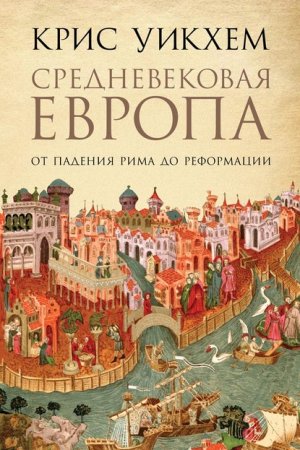
Средневековая Европа. От падения Рима до Реформации Уикхем Крис
Davis, J. R., Charlemagne’s practice of empire (Cambridge, 2015).
Davis, N. Z., ‘Les conteurs de Montaillou’, Annales ESC, 34 (1979), 61–73.
– The return of Martin Guerre (Cambridge, MA, 1983). Русский перевод: Дэвис Н. З. Возвращение Мартена Герра. – М.: Прогресс, 1990.
de Jong, M., ‘Bride shows revisited’, in Brubaker and Smith, Gender, 257–77.
– ‘Carolingian political discourse and the biblical past’, in C. Gantner et al. (eds), The resources of the past in early medieval Europe (Cambridge, 2015), 87–102.
– ‘The empire that was always decaying’, Medieval worlds, 2015, no. 2, 6–25. – The penitential state (Cambridge, 2009).
– ‘What was public about public penance?’, Settimane di studio, 45 (1997), 863–904.
de Oliveira Marques, А.H., Portugal na crise dos sculos XIV e XV (Lisbon, 1987).
Dean, T., Crime in medieval Europe (Harlow, 2001).
Decker, M., Tilling the hateful earth (Oxford, 2009)
Dejoux, M., ‘Mener une enqute gnrale, pratique. et mthodes’, in Pcout, Quand gouverner c’est enquterFINAL,133–55.
Delogu, P., ‘Il regno longobardo’, in G. Galasso (ed.), Storia d’Italia, vol. 1 (Turin, 1980), 3–216.
Delogu, P. and Gasparri, S. (eds), Le trasformazioni del V secolo (Turnhout, 2010).
Demandt, A., Der Fall Roms, 2nd edn (Munich, 2014).
– Die Sptantike (Munich, 1989).
– ‘The osmosis of late Roman and Germanic aristocracies’, in E. K. Chrysos and A. Schwarcz (eds), Das Reich und die Barbaren (Vienna, 1989), 75–86.
Depreux, P., Les socits occidentales du milieu du VIe la fin du IXe sicle (Rennes, 2002).
– ‘Lieux de rencontre, temps de ngotiation’, in R. Le Jan (ed.), La royaut et les lites dans l’Europe carolingienne (dbut IXe sicle aux environs de 920) (Lille 1998), 213–31.
Droche, V., ‘La forme de l’informe’, in P. Odorico and P. Agapitos (eds), Les vies des saints Byzance (Paris, 2004), 367–85.
Deshman, R., The benedictional of thelwold (Princeton, 1995).
Devroey, J.-P., conomie rurale et socit dans l’Europe franque (VIe – IXe sicles) (Paris, 2003)
– Puissants et misrables (Brussels, 2006).
Dhuoda, Liber manualis, ed. P. Rich, Dhuoda: Manuel pour mon fils (Paris, 1975), trans. C. Neel, Handbook for William (Lincoln, NE, 1999). Русский перевод фрагментов в книге: Памятники средневековой латинской литературы. VIII–IX века. – М.: Наука, 2006.
di Renzo Villata, M. G., ‘La formazione dei «Libri Feudorum»’, Settimane di studio, 47 (2000), 651–721.
Dialogus de Scaccario, ed. and trans. E. Amt, Constitutio domus regis, ed. and trans. S. D. Church (Oxford, 2007).
Diario bolognese di Gaspare Nadi, ed. C. Ricci and A. Bacchi della Lega (Bologna, 1886).
Die Touler Vita Leos IX., ed. H.-G. Krause, MGH, Scriptores rerum Germanicarum, vol. 70 (Hannover, 2007), trans. I. S. Robinson, The papal reform of the eleventh century (Manchester, 2004), 97–157.
Digenis Akritis, ed. and trans. E. Jeffreys (Cambridge, 1998). Русский перевод: Дигенис Акрит / Перевод, статьи и коммент. А. Я. Сыркина. – М.: Изд-во АН, 1960.
Dodd, G., Justice and grace (Oxford, 2007).
Doig, J. A., ‘Political propaganda and royal proclamations in late medieval England’, Historical research, 71 (1998), 253–80.
Dlger, F., Beitrge zur Geschichte der byzantinischen Finanzverwaltung, besonders des 10. und 11. Jahrhunderts (Leipzig, 1927).
Dollinger, P., The German Hansa (London, 1964).
Dols, M. W., The Black Death in the Middle East (Princeton, 1977).
Donner, F., Narratives of Islamic origins (Princeton, 1998).
Dora Spadaro, M., Raccomandazioni e consigli di un galantuomo (Alessandria, 1998).
Dronke, P., Women writers of the middle ages (Cambridge, 1984).
du Colombier, P., Les chantiers des cathdrales, 2nd edn (Paris, 1973).
Dubin, N. E., The fabliaux (New York, 2013).
Duby, G., La socit aux XIe et XIIe sicles dans la rgion mconnaise, 2nd edn (Paris, 1971).
– Rural economy and country life in the medieval West (Columbia, SC, 1968).
– The chivalrous society (London, 1977).
– The early growth of the European economy (London, 1974).
– The three orders (Chicago, 1980). Русский перевод: Дюби Ж. Трехчастная модель, или Представления средневекового общества о себе самом. – М.: Языки русской культуры, 2000.
– ‘Women and power’, in T. N. Bisson (ed.), Cultures of power (Philadelphia, 1995), 68–85
Dumolyn, J., ‘Justice, equity and the common good’, in D’A. J. D. Boulton and J. R. Feenstra (eds), The ideology of Burgundy (Leiden, 2006), 1–20.
Dumolyn, J. and J. Haemers, ‘“A bad chicken was brooding” ’, Past and present, 214 (2012), 45–86.
– ‘Patterns of urban rebellion in medieval Flanders’, Journal of medieval history, 31 (2005), 369–93.
Dunbabin, J., Charles of Anjou (Harlow, 1998).
– France in the making, 843–1180, 2nd edn (Oxford, 2000).
Dupr Theseider, E., ‘Caterina da Siena, santa’, in Dizionario biografico degli Italiani, vol. 22 (Rome, 1979), 361–79.
Durliat, J., ‘La peste du VIe sicle’, in Hommes et richesses dans l’empire byzantin, vol. 1 (Paris, 1989), 107–19.
Dutton, P. E., The politics of dreaming in the Carolingian empire (Lincoln, NE, 1994).
Dyer, C., An age of transition? (Oxford, 2005).
– ‘England’s economy in the fifteenth century’, The fifteenth century, 13 (2014), 201–25.
– ‘How urbnized was medieval England?’, in J.-M. Duvosquel and E. Thoen (eds), Peasants and townsmen in medieval Europe (Ghent, 1995), 169–83.
– Making a living in the middle ages (London, 2002).
– ‘Medieval Stratford’, in R. Bearman (ed.), The history of an English borough (Stratford, 1997), 43–61, 181–5.
– Standards of living in the later middle ages (Cambridge, 1989).
Earenfight, T., Queenship in medieval Europe (Basingstoke, 2013).
Ebels-Hoving, B., Byzantium in westerse ogen, 1096–1204 (Assen, 1971).
Edwards, J., ‘Religious faith and doubt in late medieval Spain’, Past and present, 120 (1988), 3–25.
– The Spain of the Catholic monarchs, 1474–1520 (Oxford, 2000).
Einhard, Vita Karoli Magni, ed. G. Waitz, MGH, Scriptores rerum Germanicarum, vol. 25 (Hannover, 1911), trans. P. E. Duttom, Charlemagne’s courtier (Peterborough, ON, 1998), 15–39. Русский перевод: Эйнхард. Жизнь Карла Великого // Историки эпохи Каролингов. – М.: Росспэн, 1999.
Ekonomou, A. J., Byzantine Rome and the Greek popes (Lanham, MD, 2007).
Eldevik, J., Episcopal power and ecclesiastical reform in the German empire (Cambridge, 2012).
Elliott, D., Fallen bodies (Philadelphia, 1999).
– Proving woman (Princeton, 2004).
Elukin, J. M., Living together, living apart (Princeton, 2007).
Engel, P., The realm of St Stephen (London, 2001).
Ennen, E., The medieval woman (Oxford, 1989).
Epistolario di Santa Catarina da Siena, ed. E. Dupr Theseider, vol. 1 (Rome, 1940), trans. S. Noffke, The letters of St. Catherine of Siena, vol. 1 (Binghampton, NY, 1988).
Epstein, S. R., An island for itself (Cambridge, 1992).
– Freedom and growth (London, 2000).
Esmonde Cleary, A. S., The ending of Roman Britain (London, 1989).
– The Roman West, AD 200–500 (Cambridge, 2013).
Estepa Dez, C., Las behetras castellanas, 2 vols (Valladolid, 2003).
Faith, R., The English peasantry and the growth of lordship (Leicester, 1997).
Farmer, D. L., ‘Prices and wages’, in The agrarian history of England and Wales, vol. 2, ed. H. E. Hallam (Cambridge, 1988), 715–817.
Fehring, G. P., The archaeology of medieval Germany (London, 1991).
Feller, L., Les Abruzzes mdivales (Rome, 1998).
– Paysans et seigneurs au Moyen ge, VIIIe – XVe sicles (Paris, 2007).
Feller, L. et al., La fortune de Karol (Rome, 2005).
Fenster, T. and D. L. Smail (eds), Fama (Ithaca, NY, 2003).
Ferruolo, S. C., The origins of the university (Stanford, 1985).
Fichtenau, H., Living in the tenth century (Chicago, 1991).
Fine, J. V. A., The late medieval Balkans (Ann Arbor, MI, 1987).
Fiore, A., ‘From the diploma to the pact’ (in press).
Firnhaber-Baker, J., ‘The eponymous Jacquerie’, in eadem, The Routledge history handbook of medieval revolt
– (ed.), The Routledge history handbook of medieval revolt (London, 2016).
Fleckenstein, J., ‘ber die Herkunft der Welfen und ihre Anfnge in Sddeutschland’, in G. Tellenbach (ed.), Studien und Vorarbeiten zur Geschichte des grossfrnkischen und frhdeutschen Adels (reiburg, 1957), 71–136.
Fleming, R., Britain after Rome (London, 2010).
– Kings and lords in conquest England (Cambridge, 1991).
– ‘Recycling in Britain after the fall of Rome’s metal economy’, Past and present, 217 (2012), 3–45.
Fletcher, C., ‘Political representation’, in idem et al., Government, 217–39.
Fletcher, C. et al. (eds), Government and political life in England and France, c.1300 – c.1500 (Cambridge, 2015).
Fletcher, R., The conversion of Europe (London, 1997).
Flint, V. I. J., The rise of magic in early medieval Europe (Oxford, 1991).
Flori, J., L’essor de la chevalerie, XIe – XIIe sicles (Geneva, 1986).
Fgen, M. T., ‘Reanimation of Roman law in the ninth century’, in L. Brubaker (ed.), Ninth-century Byzantium: dead or alive? (Aldershot, 1998), 11–22.
Foot, S. and C. F. Robinson (eds), The Oxford history of historical writing, vol. 2 (Oxford, 2012)
Forrest, I., The detection of heresy in late medieval England (Oxford, 2005).
Fortescue, Sir John, On the laws and governance of England, ed. S. Lockwood (Cambridge, 1997).
Fossier, R., Enfance de l’Europe, Xe – XIIe sicles (Paris, 1982).
Fouracre, P., ‘Carolingian justice’, Settimane di studio, 42 (1995), 771–803.
– Frankish history (Farnham, 2013).
– ‘Space, culture and kingdoms in early medieval Europe’, in P. Linehan and J. L. Nelson (eds), The medieval world (London, 2001), 366–80.
– The age of Charles Martel (London, 2000).
Fournier, G., Le chteau dans la France mdivale (Paris, 1978).
France, J., Western warfare in the age of the Crusades, 1000–1300 (Ithaca, NY, 1999).
Franceschi, F. and L. Mol, ‘L’economia del Rinascimento’, in M. Fantoni (ed.), Il Rinascimento italiano e l’Europa, vol. 1 (Treviso-Vicenza, 2006), 185–200.
– ‘Regional states and economic development’, in Gamberini and Lazzarini, The Italian Renaissance state, 444–66.
Francovich, R. and M. Ginatempo (eds), Castelli, vol. 1 (Florence, 2000).
Franklin, S., Writing, society and culture in early Rus, c. 950–1300 (Cambridge, 2002). Русский перевод: Франклин С. Письменность, общество и культура в Древней Руси (около 950–1300 гг.). – СПб.: Дмитрий Буланин, 2010.
Franklin, S. and J. Shepherd, The emergence of Rus, 750–1200 (London, 1996). Русский перевод: Франклин С., Шепард Д. Начало Руси. 750–1200. – СПб.: Дмитрий Буланин, 2009.
Frankopan, P., The First Crusade: the call from the east (London, 2011). Русский перевод: Франкопан П. Первый крестовый поход. Зов с Востока. – М.: Альпина нон-фикшн, 2018.
Freedman, P., Images of the medieval peasant (Stanford, 1999).
– The origins of peasant servitude in medieval Catalonia (Cambridge, 1991).
Freedman, P. and M. Bourin (eds), Forms of servitude in northern and central Europe (Turnhout, 2005).
Fried, J., Die Ursprnge Deutschlands bis 1024 (Berlin, 1994).
– ‘Gens und regnum’, in J. Miethke and K. Schreiner (eds), Sozialer Wandel im Mittelalter (Sigmaringen, 1994), 73–104.
Frost, R., The making of the Polish-Lithuanian union, 1385–1569 (Oxford, 2015).
Fryde, E. B. and M. M. Fryde, ‘Public credit, with special reference to north-western Europe’, The Cambridge economic history, vol. 3, 430–553.
Fudge, T. A., Jan Hus (London, 2010).
– The magnificent ride (Aldershot, 1998).
Fuentes Ganzo, E., ‘Pactismo, cortes y hermandades en Lon y Castilla: siglos XIII–XV’, in F. Foronda and A. I. Carrasco Manchado (eds), El contrato poltico en la Corona de Castilla (Madrid, 2008), 415–52.
Furi, A., Histria del pas valenci (Valencia, 1995).
Gadol, J., Leon Battista Alberti (Chicago, 1969).
Gamberini, A. and I. Lazzarini, The Italian Renaissance state (Cambridge, 2012).
Gamberini, A. et al. (eds), The languages of political society (Rome, 2011).
Ganshof, F. L., The Carolingians and the Frankish monarchy (London, 1971).
Ganz, D., ‘The debate on predestination’, in M. T. Gibson and J. L. Nelson, Charles the Bald, 2nd edn (Aldershot, 1990), 283–302.
– ‘Theology and the organisation of thought’, NCMH, vol. 2 (1995), 758–85.
Garca de Cortzar, J… ‘La formacin de la sociedad feudal en el cuadrante noroccidental de la Pennsula Ibrica en los siglos VIII a XIII’, Initium, IV (1999), 57–121.
Garzella, G., Pisa com’era (Naples, 1990).
Gasparri, S. (ed.), 774 (Turnhout, 2008).
Gasparri, S. and C. La Rocca (eds), Carte di famiglia (Rome, 2005).
Gauvard, C., ‘De grace especial’: crime, tat et socit en France la fin du Moyen ge (Paris, 1991).
– (ed.) L’Enqute au moyen ge (Rome, 2009).
Geary, P. J., Aristocracy in Provence (Stuttgart, 1985).
– ‘Ethnic identity as a situational construct in the early middle ages’, Mitteilungen des anthropologischen Gesellschaft in Wien, 113 (1983), 15–26.
– Living with the dead in the middle ages (Ithaca, NY, 1994).
– Phantoms of remembrance (Princeton, 1994).
– The myth of nations (Princeton, 2002).
Gelichi, S. and R. Hodges (eds), New directions in early medieval European archaeology (Turnhout, 2015).
Geltner, G., The making of medieval antifraternalism (Oxford, 2012).
Geremek, B., The margins of society in late medieval Paris (Cambridge, 1987).
Ghosh, S., Kings’ sagas and Norwegian history (Leiden, 2011).
Gilchrist, R., Gender and material culture (London, 1994).
Gillett, A. (ed.), On barbarian identity (Turnhout, 2002).
Gillis, M. B., ‘Heresy in the flesh’, in Stone and West, Hincmar of Rheims, 247–67.
Gilson, J. P., ‘A defence of the proscription of the Yorkists in 1459’, English historical review, 26 (1911), 512–25.
Ginatempo, M., ‘Esisteva una fiscalit a finanziamento delle guerre del primo “200?”’, in XXXVII semana de estudios medievales (Pamplona, 2011), 279–342.
– ‘Finanze e fiscalit’, in Salvestrini, L’Italia, vol. 1, 241–94.
Ginatempo, M. and L. Sandri, L’Italia delle citt (Florence, 1990).
Ginzburg, C., The night battles (London, 1983).
Glick, T. F., From Muslim fortress to Christian castle (Manchester, 1995).
Goetz, H.-W., ‘Die Wahrnehmung von “Staat” und “Herrschaft” im frhen Mittelalter’, in S. Airlie et al. (eds), Staat im frhen Mittelalter (Vienna, 2006), 39–58.
– ‘“Nobilis”: der Adel im Selbstverstndnis der Karolingerzeit’, Vierteljahrschrift fr Sozial– und Wirtschaftsgeschichte, 60 (1983), 153–91.
Goetz, H.-W. et al. (eds), Regna and gentes (Leiden, 2003).
Goffart, W., Barbarians and Romans, A. D. 418–584 (Princeton, 1980).
– The narrators of barbarian history (A. D. 550–800) (Princeton, 1988).
Goitein, S. D., A Mediterranean society (Berkeley, 1967–93).
Goldberg, E. J., ‘Louis the Pious and the hunt’, Speculum, 88 (2013), 613–43.
– ‘Popular revolt, dynastic politics and aristocratic factionalism in the early middle ages’, Speculum, 70 (1995), 467–501.
– Struggle for empire (Cambridge, 2006).
Goldberg, J., Trade and institutions in the medieval Mediterranean (Cambridge, 2012).
Goldberg, P. J. P., Women, work and life cycle in a medieval economy (Oxford, 1992).
Goldthwaite, R. A., The economy of Renaissance Florence (Baltimore, 2009).
Gller, K. H., Knig Arthur in der englischen Literatur des spten Mittelalters (Gttingen, 1963).
Gonnet, G., ‘Le cheminement des vaudois vers le schisme et l’hrsie (1174–1218) ’, Cahiers de civilisation mdivale, 19 (1976), 309–45.
Gonzlez Jimnez, M., Alfonso X el Sabio (Barcelona, 2004).
Goodman, A., Margery Kempe and her world (Harlow, 2002).
Goodson, C., The Rome of Pope Paschal I (Cambridge, 2010).
Grecki, P., Economy, society, and lordship in medieval Poland, 1100–1250 (New York, 1992).
Gouma-Peterson, T. (ed.), nna Komnene and her times (New York, 2000).
Gowers, B., ‘996 and all that’, EME, 21 (2013), 71–98.
Grant, A., Independence and nationhood (Edinburgh, 1984).
Gravdal, K., Ravishing maidens (Philadelphia, 1991).
Gray, P. T. R., The defence of Chalcedon (Leiden, 1979).
Greatrex, G. and S. N. C. Lieu, The Roman eastern frontier and the Persian wars, part II (London, 2002).
Green, J. A., The government of England under Henry I (Cambridge, 1986).
– ‘The last century of Danegeld’, English historical review, 96 (1981), 241–58.
Green, M. H., ‘Women’s medical practice and health care in medieval Europe’, Signs, 14 (1989), 434–73.
– (ed.), Pandemic disease in the medieval world, 1 (2014), http://scholarworks.wmich.edu/medieval_globe/1/, accessed 7 April 2015.
Green, W. A., ‘Periodisation in European and world history’, Journal of world history, 3 (1992), 13–53.
Gregory of Tours, Decem libri historiarum, ed. B. Krusch and W. Levison, MGH, Scriptores rerum Merovingicarum, vol.1.1, 2nd edn (Hannover, 1951), trans. L. Thorpe, The history of the Franks (Harmondsworth, 1974). Русский перевод: Григорий Турский. История франков. – М.: Наука, 1987.
– De virtutibus sancti Martini episcopi, ed. B. Krusch, MGH, Scriptores rerum Merovingicarum, vol. 1.2 (Hannover, 1885), 584–661, trans. R. Van Dam, Saints and their miracles in late antique Gaul (Princeton, 1993), 200–303.
Grillo, P., Legnano 1176 (Bari, 2010).
– Milano in et comunale (1183–1276) (Spoleto, 2001).
Grimm, P., Tilleda, 2 vols (Berlin, 1968–90).
Gunn, S. and A. Janse (eds), The court as a stage (Woodbridge, 2006).
Gurr, T. R., ‘Historical trends in violent crime’, Crime and justice, 3 (1981), 295–353.
Guzowski, P., ‘Village court records and peasant credit in fifteenth– and sixteenth-century Poland’, Continuity and change 29 (2014), 115–42.
Hberlein, M., The Fuggers of Augsburg (Charlottesville, VA, 2012).
Hadley, D. M. (ed.), Masculinity in medieval Europe (London, 1999).
Haldon, J., A critical commentary on the Taktika of Leo VI (Washington, DC, 2014).
– ‘Approaches to an alternative military history of the period ca. 1025–1071’, in autokratoria se kris (Athens, 2003), 45–74.
– Byzantium in the seventh century, 2nd edn (Cambridge, 1997).
– Warfare, state and society in the Byzantine world, 565–1204 (London, 1999).
Halsall, G., Barbarian migrations and the Roman west, 376–568 (Cambridge, 2007).
Читать бесплатно другие книги: