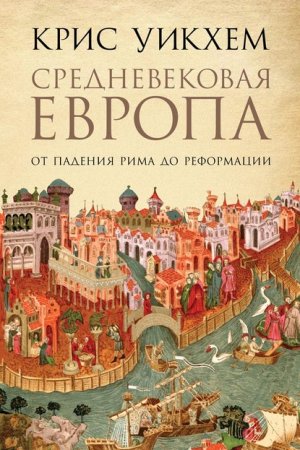
Средневековая Европа. От падения Рима до Реформации Уикхем Крис
Mann, N., Petrarch (Oxford, 1984).
Manzano Moreno, E., Conquistadores, emires y califas (Barcelona, 2006).
Map, W., De nugis curialium, ed. and trans. M. R. James, 2nd edn (Oxford, 1983).
Marchal, G. P., ‘Die Antwort der Bauern’, Vortrge und Forschungen, 31 (1987), 757–90.
– Sempach 1386 (Basel, 1986).
Markus, R. A., Gregory the Great and his world (Cambridge, 1997).
Margolis, O., The politics of culture in Quattrocento Europe (Oxford, 2016).
Martin, G. H., ‘Merton, Walter of (c.1205–1277) ’, Oxford dictionary of national biography (Oxford, 2004).
Martin, J., Medieval Russia, 980–1584, 2nd edn (Cambridge, 2007)
Martin, J.-M., La Pouille du VIe au XIIe sicle (Rome, 1993)
Martindale, J., ‘“An unfinished business” ’, Anglo-Norman studies, 23 (2000), 115–54.
– Status, authority and regional power (Aldershot, 1997).
Martines, L. The social world of the Florentine humanists, 1390–1460 (London, 1963).
Marx, K., The eighteenth Brumaire of Louis Bonaparte, trans. D. Fernbach, Surveys from exile (London, 1973), 143–249. Русский перевод: Маркс К., Энгельс Ф. Восемнадцатое брюмера Луи Бонапарта // Сочинения. Т. 8. – М.: Госполитиздат, 1957.
Masschaele, J., ‘Economic takeoff and the rise of markets’, in C. Lansing and E. D. English (eds), A companion to the medieval world (Oxford, 2009), 89–110.
– Peasants, merchants, and markets (New York, 1997).
McCormick, M., Eternal victory (Cambridge, 1986).
– Origins of the European economy (Cambridge, 2001).
McDonnell, E. W., The beguines and beghards in medieval culture (New York, 1954).
McFarlane, K. B., The nobility of later medieval England (Oxford, 1973).
McKitterick, R., Charlemagne (Cambridge, 2008).
– Perceptions of the past in the early middle ages (Notre Dame, IN, 2006).
– The Carolingians and the written word (Cambridge, 1989).
– The Frankish kingdoms under the Carolingians, 751–987 (Harlow, 1983).
McNamara, J. A. and S. Wemple, ‘The power of women through the family in medieval Europe: 500–1100’, Feminist studies, 3/4 (1973), 126–41.
McSheffrey, S., ‘Heresy, orthodoxy and English vernacular religion, 1480–1525’, Past and present, 186 (2005), 47–80.
Meijers, E. M., tudes d’histoire du droit, vol. 3 (Leiden, 1959).
Melve, L., Inventing the public sphere (Leiden, 2007).
Menant, F., Campagnes lombardes au moyen ge (Rome, 1993).
– L’Italie des communes (1100–1350) (Paris, 2005).
Mnard, P., Les fabliaux (Paris, 1983).
Mengel, D. C., ‘A plague on Bohemia?’, Past and present, 200 (2011), 3–34.
Menjot, D. and M. Snchez Martnez (eds), Fiscalidad de estado y fiscalidad municipal en los reinos hispnicos medievales (Madrid, 2006).
Merrills, A. and R. Miles, The Vandals (Oxford, 2014).
Meyer, T., ‘The state of the dukes of Zhringen’, in G. Barraclough (ed. and trans.), Medieval Germany, 911–1250, vol. 2 (Oxford, 1938), 175–202.
MGH, Capitularia regum Francorum, ed. A. Boretius and V. Krause, 2 vols (Hannover, 1883–97).
MGH, Epistolae, vol. 5, ed. K. Hampe et al. (Berlin, 1899).
MGH, Epistolae, vol. 7, ed. E. Caspar et al. (Berlin, 1928).
MGH, Formulae Merowingici et Karolini aevi, ed. K. Zeumer (Hannover, 1886).
MGH, Poetae Latini aevi Carolini, vol. 2, ed. E. Dmmler (Berlin, 1884).
Milani, G., I comuni italiani, secoli XII–XIV (Bari, 2005).
Miller, M. C., ‘The crisis in the Investiture Crisis narrative’, History compass, 7/6 (2009), 1570–80.
– The formation of a medieval church (Ithaca, NY, 1993).
Miller, W. I., Bloodtaking and peacemaking (Chicago, 1990).
– ‘Why is your axe bloody?’ (Oxford, 2014).
Mitchell K. and I. Wood (eds), The world of Gregory of Tours (Leiden, 2002).
Molinari, A. (ed.), ‘Mondi rurali d’Italia’, Archeologia medievale, 37 (2010), 11–281.
Mollat, M., ‘Recherches sur les finances des ducs valois de Bourgogne’, Revue historique, 219 (1958), 285–321.
Molyneaux, G., The formation of the English kingdom in the tenth century (Oxford, 2015).
Montanari, M., L’alimentazione contadina nell’alto medioevo (Naples, 1979).
Moore, R. I., ‘Family, community and cult on the eve of the Gregorian reform’, Transactions of the Royal Historical Society, 5th ser., 30 (1980), 49–69.
– The first European revolution, c. 970–1215 (Oxford, 2000).
– The war on heresy (London, 2012).
– The formation of a persecuting society, 2nd edn (Oxford, 2007).
Moorhead, J., Justinian (London, 1994).
– Theoderic in Italy (Oxford, 1992).
Moraw, P., Von offener Verfassung zu gestalteter Verdichtung (Berlin, 1985).
Morelli, S., ‘Note sulla fiscalit diretta e indiretta nel Regno angioino’, in C. Massaro and L. Petracca (eds), Territorio, cultura e poteri nel Medioevo e oltre, vol. 1 (Galatina, 2011), 389–413.
Morris, C., The papal monarchy (Oxford, 1989).
Morrison, K. F., Understanding conversion (Charlottesville, VA, 1992).
Morsel, J., L’aristocratie mdivale (Paris, 2004).
Mortensen, P., and B. Rasmussen (eds), Fra stamme til stat i Danmark, 2 vols (Hjbjerg, 1988–91).
Moss, R. E., Fatherhood and its representations in Middle English texts (Woodbridge, 2013).
Moustakas, K., ‘Byzantine “visions” of the Ottoman empire’, in A. Lymberopoulou (ed.), Images of the Byzantine world (Farnham, 2011), 215–29.
Mller, G. (ed.), Documenti sulle relazioni delle citt toscane coll’Oriente cristiano e coi Turchi (Florence, 1879).
Mller-Mertens, E., Karl der Grosse, Ludwig der Fromme, und die Freien (Berlin, 1963).
– Regnum Teutonicum (Berlin-Vienna, 1970).
Murray, A., Reason and society in the middle ages (Oxford, 1978).
Muscatine, C., The Old French fabliaux (New Haven, 1986).
Myhre, B., ‘Chieftains’ graves and chiefdom territories in south Norway in the migration period’, Studien zur Sachsenforschung, 6 (1987), 169–87.
Myking, J. R. and C. Porskrog Rasmussen, ‘Scandinavia, 1000–1750’, in B. van Bavel and R. Hoyle (eds), Social Relations: Property and Power (Turnhout, 2010).
Naccache, A., Le dcor des glises des villages d’Antiochne du IVe au VIIe sicle (Paris, 1992)
Naismith, R., Money and power in Anglo-Saxon England (Cambridge, 2012).
Nedungatt, G., and M. Featherstone (eds), The Council in Trullo revisited (Rome, 1995).
Nef, A. and V. Prigent (eds), La Sicile de Byzance l’Islam (Paris, 2010).
Negrelli, C., ‘Towards a definition of early medieval pottery’, in S. Gelichi and R. Hodges (eds), From one sea to another (Turnhout, 2012), 393–416.
Nelson, J. L., ‘Aachen as a place of power’, in M. de Jong et al. (eds), Topographies of power in the early middle ages (Leiden, 2001), 217–41.
– Charles the Bald (London, 1992).
– ‘How the Carolingians created consensus’, in. W. Fakowski and Y. Sassier (eds), Le monde carolingien (Turnhout, 2009), 67–81.
– ‘Literacy in Carolingian government’, in R. McKitterick (ed.), The uses of literacy in early medieval Europe (Cambridge, 1990), 258–96.
– Politics and ritual in early medieval Europe (London, 1986).
– ‘The settings of the gift in the reign of Charlemagne’, in W. Davies and P. Fouracre (eds), The languages of gift in the early middle ages (Cambridge, 2010), 116–48.
Neville, L., Authority in Byzantine provincial society, 950–1100 (Cambridge, 2004).
– Heroes and Romans in twelfth-century Byzantium (Cambridge, 2012).
N Mhaonaigh, M., Brian Boru (Stroud, 2007).
Nicphore, Discours contre les Iconoclastes, trans. M.-J. Mondzain-Baudinet (Paris, 1989).
Nicholas, D., Medieval Flanders (Harlow, 1992).
– The growth of the medieval city (Abingdon, 1997).
Nicholls, K. W., Gaelic and Gaelicized Ireland in the middle ages, 2nd edn (Dublin, 2003).
Nicholson, R., Scotland: the later middle ages (Edinburgh, 1974).
Nicol, D. M., The last centuries of Byzantium, 1261–1453, 2nd edn (Cambridge, 1993).
Nielsen, P. O. et al. (eds), The archaeology of Gudme and Lundeborg (Copenhagen, 1994).
Nirenberg, D., Communities of violence (Princeton, 1996).
Noble, T. F. X., The Republic of St. Peter (Philadelphia, 1984).
– (ed.), From Roman province to medieval kingdoms (London, 2006).
Noble, T. F. X. and J. Van Engen (eds), European transformations (Notre Dame, IN, 2012).
Notker, Gesta Karoli magni imperatoris, ed. H. F. Hfele, MGH, Scriptores rerum Germanicarum, N. S., vol. 12 (Berlin, 1959). Русский перевод фрагментов в книге: Памятники средневековой латинской литературы. VIII–IX века. – М.: Наука, 2006.
Nowakowska, N., Church, state and dynasty in Renaissance Poland (Aldershot, 2007).
Corrin, D., Ireland before the Normans (Dublin, 1972).
O’Callaghan, J. F., The cortes of Castile-Len, 1188–1350 (Philadelphia, 1989).
Oldfield, P., City and community in Norman Italy (Cambridge, 2009).
Olesen, J. E., ‘Inter-Scandinavian relations’, in K. Helle (ed.), The Cambridge history of Scandinavia, vol. 1 (Cambridge, 2003), 710–70.
Oliva Herrer, H. R. et al. (eds), La comunidad medieval como esfera pblica (Seville, 2014).
Ormrod, W. M., ‘England in the middle ages’, in Bonney, The rise of the fiscal state, 19–52.
– ‘The west European monarchies in the later middle ages’, in Bonney, Economic systems, 123–60.
Ormrod, W. M. and J. Barta, ‘The feudal structure and the beginnings of state finance’, in Bonney, Economic systems, 53–79.
Orning, H. J., Unpredictability and presence (Leiden, 2008).
Oschema, K., Bilder von Europa im Mittelalter (Ostfildern, 2013).
Ostrowski, D., Muscovy and the Mongols (Cambridge, 1998).
Ousterhout, R., The art of the Kariye Camii (London, 2002).
Padoa-Schioppa, A., Il diritto nella storia d’Europa, vol. 1 (Padua, 1995).
Palliser, D. M. (ed.), The Cambridge urban history of Britain, vol. 1 (Cambridge, 2008).
Palmer, J. T., ‘Defining paganism in the Carolingian world’, EME, 15 (2007), 402–25.
– The Apocalypse in the early middle ages (Cambridge, 2014).
Panella, C., ‘Merci e scambi nel Mediterraneo in et tardoantica’, in A. Carandini et al. (eds), Storia di Roma, vol. 3.2 (Turin, 1993), 613–97.
Panero, F., Schiavi servi e villani nell’Italia medievale (Turin, 1999).
Pantos, A., ‘In medle oe an inge’, in eadem and S. Semple (eds), Assembly places and prac-tices in medieval Europe (Dublin, 2004), 180–201.
Papaioannou, S., Michael Psellos: rhetoric and authorship in Byzantium (Cambridge, 2013).
Paravicini Bagliani, A., Il trono di Pietro (Rome, 1996).
Parisse, M., ‘Leone IX, papa, santo’, in Dizionario biografico degli Italiani, vol. 64 (Rome, 2005), 507–13.
Parsons, J. C., ‘Isabella (1295–1358) ’, Oxford dictionary of national biography (Oxford, 2004).
Parthasarathi, P., Why Europe grew rich and Asia did not (Cambridge, 2011).
Partner, P., ‘The “budget” of the Roman church in the Renaissance period’, in E. F. Jacob (ed.), Italian Renaissance studies (London, 1960), 256–78.
Paschasius Radbert, Epitaphium Arsenii, ed. E. Dmmler, Philosophische und historische Abhandlungen der kniglichen Akademie der Wissenschaften zu Berlin, 2 (1900), 1–98, trans. A. Cabaniss, Charlemagne’s cousins (Syracuse, NY, 1967).
Passio prima Leudegarii episcopi Augustodunensis, ed. B. Krusch, MGH, Scriptores rerum Merovingicarum, vol. 5 (Hannover, 1910), 282–322, trans. P. Fouracre and R. A. Gerberding, Late Merovingian France (Manchester, 1996), 193–253.
Pastor, R., Resistencias y luchas campesinas en la poca de crecimiento y consolidacin de la formacin feudal (Madrid, 1980).
Patzold, S., Das Lehnswesen (Munich, 2012) Patzold, S., Ich und Karl der Grosse (Stuttgart, 2013).
Pcout, T. (ed.), Quand gouverner c’est enquter (Paris, 2010)
Pedersen, F., ‘A good and sincere man… even though he looked like a Slav’, Mediaeval Scandinavia, 20 (2010), 141–62.
Pegg, M. G., A most holy war (Oxford, 2008).
– The corruption of angels (Princeton, 2001).
Prez Sanchez, D., El ejrcito en la sociedad visigoda (Salamanca, 1989).
Peterson, J. L., ‘Holy heretics in later medieval Italy’, Past and present, 204 (2009), 3–31.
Petrocchi, G., ‘Biografia’, Enciclopedia dantesca: appendice (Rome, 1978), 3–53.
Phillips, J., The Fourth Crusade and the sack of Constantinople (London, 2005).
Pirenne, H., Histoire de Belgique, vol. 1, 5th edn (Brussels, 1929).
– Mohammed and Charlemagne (London, 1939). Русский перевод: Пиренн А. Империя Карла Великого и Арабский халифат. Конец античного мира. – М.: Центрполиграф, 2011.
Pixton, P. B., The German episcopacy and the implementation of the decrees of the Fourth Lateran Council, 1216–1245 (Leiden, 1995).
Pohl, W., ‘Frontiers in Lombard Italy’, in idem et al. (eds), The transformation of frontiers (Leiden, 2001), 117–41.
Pohl, W. and P. Erhart (eds), Die Langobarden (Vienna, 2005).
Pohl, W. and G. Heydemann (eds), Strategies of identification (Turnhout, 2013).
Pollard, A., ‘The people, politics and the constitution in the fifteenth century’, in R. W. Kaeuper (ed.), Law, governance and justice (Leiden, 2013), 311–28.
Pollock, F. and F. W. Maitland, The history of English law before the time of Edward I, 2 vols (Cambridge, 1898).
Poloni, A., Trasformazioni della societ e mutamenti delle forme politiche in un Comune italiano (Pisa, 2004).
Poly, J.-P. and . Bournazel, The feudal transformation, 900–1200 (New York, 1991).
Pomeranz, K., The great divergence (Princeton, 2000).
Portass, R., ‘All quiet on the western front?’, EME, 21 (2013), 283–306.
Pssel, C., ‘Authors and recipients of Carolingian capitularies, 779–829’, in R. Corradini et al. (eds), Texts and identities in the early middle ages (Vienna, 2006), 253–74.
Postan, M., The medieval economy and society (London, 1972)
Poulsen, B. and S. M. Sindbaek (eds), Settlement and lordship in Viking and early medieval Scandinavia (Turnhout, 2011).
Prater, E. S., Curia and cortes in Len and Castile (Cambridge, 1980).
Prestwich, M., Plantagenet England 1225–1360 (Oxford, 2005).
Prigent, V., ‘The mobilisation of fiscal resources in the Byzantine empire (eighth to eleventh centuries) ’, in J. Hudson and A. Rodrguez (eds), Diverging paths (Leiden, 2014), 182–229.
Prinz, F., Klerus und Krieg im frheren Mittelalter (Stuttgart, 1971).
Provero, L., L’Italia dei poteri locali (Rome, 1998).
Pryor, J., ‘Foreign policy and economic policy’, in L. O. Frappell (ed.), Principalities, powers and estates (Adelaide, 1980), 43–55.
Psellos, M., Chronographia, trans. E. R. A. Sewter, Fourteen Byzantine rulers (London, 1966). Русский перевод: Михаил Пселл. Хронография. Краткая история / Пер. Я. Н. Любарского, Д. А. Черноглазова, Д. Р. Абдрахмановой. – СПб.: Алетейя, 2003.
Puin, G.-R., Der Dwn von ‘Umar ibn al-Hattb (Bonn, 1970).
Purkis, W. J., Crusading spirituality in the Holy Land and Iberia, c.1095 – c.1187 (Woodbridge, 2008).
Quaglioni, D., Politica e diritto nel Trecento italiano (Florence, 1983).
Raccagni, G., The Lombard league, 1167–1225 (Oxford, 2010) Raine, M., ‘“Fals flesch” ’, New Medieval Literatures, 7 (2005), 101–26.
Randsborg, K., The Viking age in Denmark (London, 1980).
Rapp, C., Holy bishops in late antiquity (Berkeley, 2005).
Rawcliffe, C., Leprosy in medieval England (Woodbridge, 2006).
Recht, R. (ed.), Les batisseurs des cathdrales gothiques (Strasbourg, 1989).
Redon, O., ‘Seigneurs et communauts rurales dans le contado de Sienne au XIIIe sicle’, Mlanges de l’cole franaise de Rome: moyen ge, 91 (1979), 149–96, 619–57.
Reimitz, H., History, Frankish identity and the framing of Western ethnicity, 550–850 (Cambridge, 2015).
Reuter, T., ‘Assembly politics in western Europe from the eighth century to the twelfth’, in P. Linehan and J. L. Nelson (eds), The medieval world (London, 2001), 432–50.
– Germany in the early middle ages, c. 800–1056 (London, 1991).
– ‘Gifts and simony’, in E. Cohen and M. de Jong (eds), Medieval transformations (Leiden, 2000), 157–68.
– Medieval polities and modern mentalities, ed. J. L. Nelson (Cambridge, 2006).
Rexroth, F., Deviance and power in late medieval London (Cambridge, 2007).
Reyerson, K., ‘Urban economies’, in Bennett and Karras, The Oxford handbook of women and gender, 295–310.
Reynolds, S., Fiefs and vassals (Oxford, 1994).
– Kingdoms and communities in western Europe, 900–1300 (Oxford, 1984).
– ‘There were states in medieval Europe’, Journal of historical sociology, 16 (2003), 550–5.
Rich, P., coles et enseignement dans le haut moyen ge (Paris, 1989).
– Gerbert d’Aurillac (Paris, 1987).
Rimbert, Vita Anskarii, ed. G. Waitz, MGH, Scriptores rerum Germanicarum, vol. 55 (Hannover 1884).
Rio, A., Slavery after Rome, 500–1100 (Oxford, 2016).
Ripoll, G. and J. M. Gurt (eds), Sedes regiae (ann. 400–800) (Barcelona, 2000).
Rist, R., Popes and Jews, 1095–1291 (Oxford, 2016).
Rizzi, A., (ed.), Statuta de ludo (Rome, 2012).
Roach, L., Kingship and consent in Anglo-Saxon England, 871–978 (Cambridge, 2013).
Robert of Torigni, Chronica, ed. R. Howlett, Chronicles of the reigns of Stephen, Henry II and Richard I, vol. 4 (London, 1889).
Robertson, A. J. (ed.), Anglo-Saxon charters (Cambridge 1939).
Robinson, C. F., Islamic historiography (Cambridge, 2003).
Robinson, I. S., Henry V of Germany, 1056–1106 (Cambridge, 1999).
– The papacy 1073–1198 (Cambridge, 1990).
Rodrguez, Lpez, A., La consolidacin territorial de la monarqua feudal castellana (Madrid, 1994).
– La estirpe de Leonor de Aquitania (Barcelona, 2014).
Roesdahl, E., The Vikings (London, 1987).
Rollo-Koster, J. and T. M. Izbicki (eds), A companion to the Great western schism (1378–1417) (Leiden, 2009).
Roper, L., Oedipus and the Devil (London, 1994).
– The holy household (Oxford, 1989).
Rosenwein, B., A short history of the middle ages, 3rd edn (Toronto, 2009).
– Rhinoceros bound (Philadelphia, 1982).
– ‘The family politics of Berengar I, king of Italy (888–924)’, Speculum, 71 (1996), 247–89.
Rosser, G., The art of solidarity in the middle ages (Oxford, 2015).
Rowell, S. C., Lithuania ascending (Cambridge, 1994).
Читать бесплатно другие книги: